
Every dog owner wants their furry friend to be healthy, happy, and well-behaved. But one question often creates confusion: How much exercise do dogs need? The answer isn’t simple because every dog is different. Age, breed, health, and even personality all play a role. Still, understanding the basics can help you make the right choices for your dog’s physical and mental health. Let’s explore how much exercise dogs really need and how you can tailor activity to your dog’s unique needs.
Why Dogs Need Exercise
Exercise is not just about burning energy. It’s about keeping your dog’s body and mind healthy. Regular activity helps with:
- Weight control: Prevents obesity, which is linked to diabetes, heart disease, and arthritis.
- Mental stimulation: Reduces boredom, which can lead to destructive behavior.
- Socialization: Walks and play help dogs meet new people and animals.
- Strength and flexibility: Keeps muscles, bones, and joints healthy.
- Behavior improvement: Active dogs are usually better behaved and less anxious.
Even small dogs or older pets need some form of exercise. Without it, dogs can develop health problems and unwanted habits.
Factors Affecting How Much Exercise A Dog Needs
The right amount of exercise is different for every dog. Four main factors influence your dog’s needs.
1. Breed
Some breeds are bred for work and have high energy. Others prefer a slower pace.
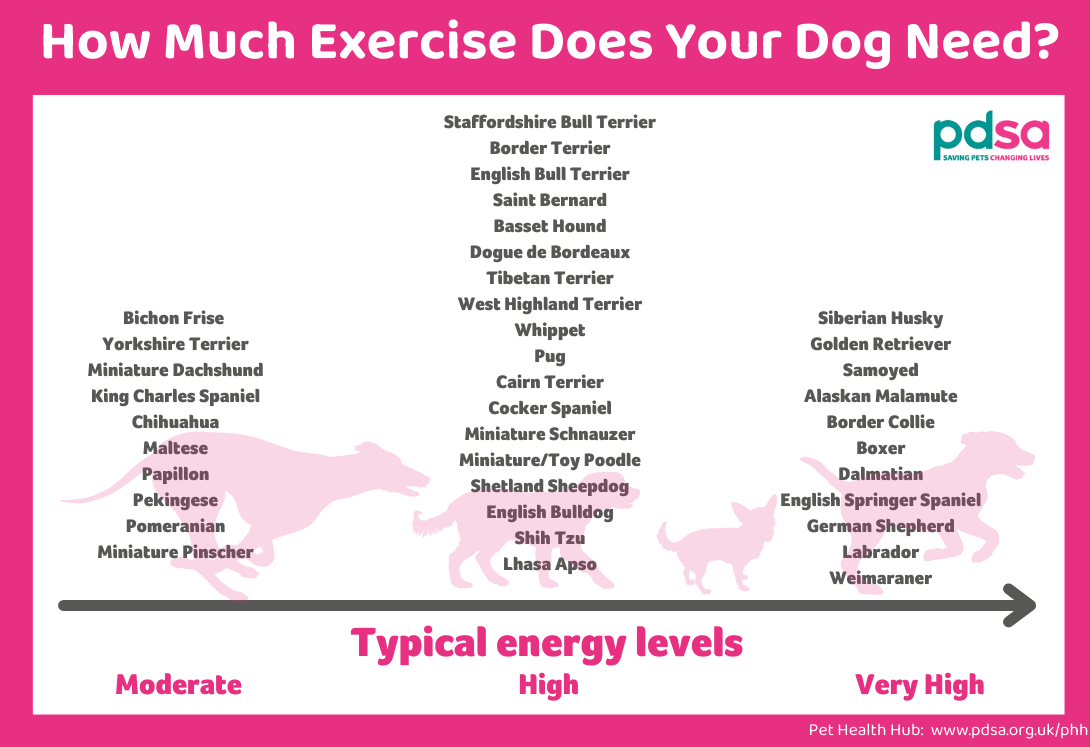
- High-energy breeds: Border Collies, Siberian Huskies, Labradors, and Jack Russell Terriers need lots of exercise.
- Low-energy breeds: Bulldogs, Basset Hounds, Shih Tzus, and Chihuahuas require less.
2. Age
- Puppies: Have bursts of energy but tire quickly. They need short, frequent playtimes.
- Adults: Generally need the most exercise. The exact amount depends on breed and health.
- Seniors: Slower pace, but regular movement keeps joints flexible.
3. Health
If your dog is overweight, has arthritis, or heart problems, talk to a vet. Some dogs need special exercise plans.
4. Personality
Not all dogs of the same breed have the same energy. Some are naturally more active or more laid-back.
General Exercise Guidelines By Dog Type
You can use these general rules, but always adjust for your own dog.
| Dog Type | Exercise Needs (Per Day) | Example Breeds |
|---|---|---|
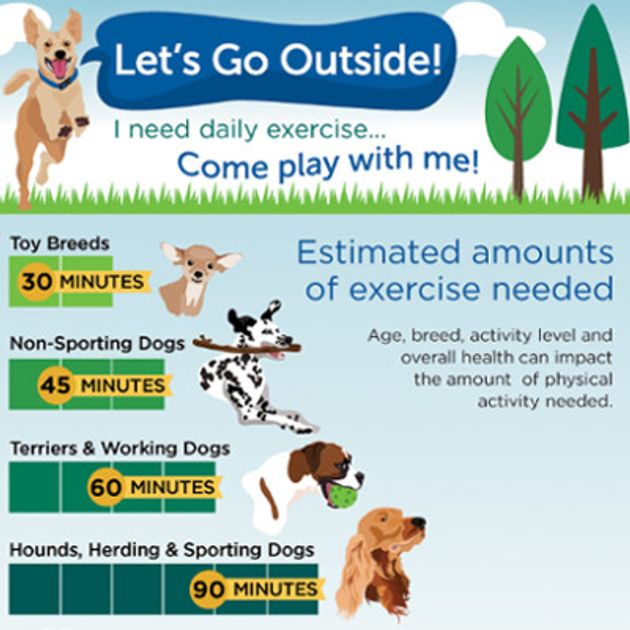
| High-Energy/Working | 1.5 – 2 hours | Border Collie, Siberian Husky, Labrador Retriever |
| Moderate-Energy | 1 hour | Beagle, Cocker Spaniel, Standard Poodle |
| Low-Energy/Companion | 30 – 45 minutes | Bulldog, Chihuahua, Shih Tzu |
| Toy Breeds | 20 – 30 minutes | Pomeranian, Maltese |
Remember, these are starting points. Some dogs need more, some less. Watch your dog’s behavior to decide if you need to increase or decrease activity.
How Age Changes Exercise Needs
Puppies and senior dogs have special exercise needs. Here’s how it varies:
| Age Group | Recommended Exercise | Notes |
|---|---|---|
| Puppy | 5 minutes per month of age, up to twice daily | Short play sessions, avoid forced running |
| Adult | 30 minutes to 2 hours | Depends on breed and energy level |
| Senior | 20 – 40 minutes (gentle activity) | Focus on low-impact, joint-friendly exercises |
For example, a 4-month-old puppy should exercise about 20 minutes at a time, twice a day. Seniors benefit from slow walks and gentle play.
Types Of Exercise For Dogs
Exercise is more than just walking. Mixing activities helps keep dogs engaged and fit.
Walking
The classic and easiest exercise. Most dogs need at least one good walk every day. Vary the route to keep things interesting.
Running
Great for active breeds, but be careful with puppies and older dogs. Always build up distance slowly.
Fetch And Tug-of-war
Games like fetch and tug-of-war give both physical and mental exercise. Use soft toys to protect teeth.
Swimming
Low-impact and easy on the joints. Perfect for dogs with arthritis or mobility issues.
Agility And Training
Obstacle courses, jumps, and advanced training exercises are fun for smart breeds. These activities also improve focus.
Social Play
Dog parks or playdates allow dogs to burn energy and practice social skills.
Indoor Activities
On bad weather days, play hide-and-seek, use puzzle toys, or teach new tricks inside.
Signs Your Dog Needs More (or Less) Exercise
Watch for these signs to see if your routine is right:
Signs Of Not Enough Exercise
- Chewing furniture, shoes, or other items
- Restlessness or pacing
- Excessive barking or whining
- Weight gain
- Hyperactivity, especially in the evening
Signs Of Too Much Exercise
- Limping or sore muscles
- Reluctance to walk or play
- Lethargy or excessive sleeping
- Damaged paw pads
- Heavy panting long after exercise
Dogs can’t tell you in words, but their behavior is a good guide. Adjust activity if you notice these changes.
How To Build A Good Exercise Routine
A good routine fits your dog’s needs and your lifestyle. Here’s how to make one:
- Start slow if your dog is not used to exercise.
- Mix different activities: Walking, play, and mental games.
- Exercise at the same times each day for routine.
- Watch the weather. Avoid hot pavement and extreme cold.
- Let your dog rest and drink water during and after activity.
- Increase activity if your dog is restless or gains weight.
- Reduce activity if your dog seems tired, sore, or uninterested.
Exercise Mistakes Dog Owners Make
Many owners get exercise wrong without realizing it. Here are common mistakes:
- Over-exercising puppies: Too much running can damage growing joints.
- Forgetting mental exercise: Dogs need brain games, not just walks.
- Ignoring breed needs: A Bulldog doesn’t need a 5-mile run, but a Border Collie might.
- Skipping rest days: Dogs need recovery, just like people.
- Not adjusting for weather: Heatstroke and frostbite are risks for dogs, especially when too active in extreme conditions.
Credit: www.pdsa.org.uk
Exercise Tips For Special Situations
Some dogs need a unique approach.
Overweight Dogs
Start with short, slow walks. Add time slowly. Swimming is easier on joints. Talk to a vet about safe weight loss.
Flat-faced (brachycephalic) Breeds
Breeds like Pugs and Bulldogs can overheat and have breathing issues. Avoid exercise in heat and keep sessions short.
Dogs With Health Issues
Ask your vet for a plan. Many dogs with arthritis, heart problems, or injuries can still benefit from gentle activity.
Busy Owners
Short, frequent walks add up. Puzzle feeders, indoor fetch, and hiring a dog walker can help.
How Weather Affects Dog Exercise
Weather can change how much and what kind of exercise is safe.
- Hot weather: Walk early or late. Bring water. Avoid hot pavement and midday sun.
- Cold weather: Use dog coats for small or short-haired breeds. Watch for ice and salt.
- Rain or snow: Play indoors with toys or training games.
Dogs with long fur may handle cold better, but all dogs are at risk for heatstroke in summer.
How To Tell If Your Dog Is Getting Enough Exercise
Besides watching for boredom or destructive behavior, look for these positive signs:
- Healthy body weight
- Relaxed and calm at home
- Good muscle tone
- Sleeps well at night
- Eager for walks, but not frantic
If your dog is happy and healthy, you’re probably doing it right.
Example Daily Exercise Plans By Breed
Here are sample routines for different types of dogs.
| Breed Example | Morning | Afternoon | Evening |
|---|---|---|---|
| Border Collie (High-Energy) | 45-min walk/jog | 30-min play (fetch, agility) | 30-min walk, training games |
| Beagle (Moderate-Energy) | 30-min walk | 20-min sniffing game | 20-min walk/play |
| Shih Tzu (Low-Energy) | 20-min gentle walk | Puzzle toy, 10-min play | 15-min slow walk |
You can adjust the activities and times to match your dog’s needs.
Credit: www.akc.org
When To Talk To A Vet
If your dog is limping, coughing, or seems unwell after exercise, see a vet. Also, ask a vet before starting a new exercise routine if your dog is overweight, has heart or joint problems, or is a senior.
Non-obvious Insights For Dog Exercise
Most owners focus on physical activity, but mental stimulation is just as important. Smart breeds like Poodles, Collies, and German Shepherds need brain work as much as body work. Puzzle toys, scent games, and new tricks can tire a dog out more than a long walk.
Another detail many miss: consistency is more important than intensity. Dogs benefit from daily, moderate exercise more than occasional long outings. Skipping several days and then doing a marathon walk can cause injuries and stress.
For more detailed guidance on breed-specific exercise, you can check this American Kennel Club guide.
Keeping your dog active is one of the best gifts you can give. Pay attention to their needs, and you’ll have a happier, healthier companion for years to come.
Credit: www.petsafe.com
Frequently Asked Questions
How Do I Know If My Dog Is Getting Enough Exercise?
Look for signs like a calm attitude at home, healthy weight, and eagerness for walks. If your dog is chewing things, barking a lot, or restless, they may need more activity.
Can I Exercise My Dog Too Much?
Yes, especially in puppies, seniors, or breeds with health issues. Watch for limping, reluctance to move, or tiredness. Too much exercise can injure joints and muscles.
What If I Have A Small Apartment And No Yard?
You can still provide enough exercise. Use indoor games, puzzle toys, and short, frequent walks. Even city dogs can stay fit with creative activities.
Does My Senior Dog Still Need Exercise?
Absolutely. Seniors need gentle, regular movement to stay healthy. Short walks and soft play help keep joints flexible and prevent weight gain.
How Much Exercise Does A Puppy Need?
Puppies need short, frequent play sessions. A good rule is about 5 minutes per month of age, up to twice a day. Avoid forced running or jumping to protect growing bones.
By understanding your dog’s unique needs and watching for signs, you can give them the exercise and enrichment they need for a long, happy life.
