
Cats are often seen as clean, independent animals, yet even the best-groomed cat can suddenly start scratching and biting at its fur. This strange behavior worries many cat owners, and the main reason is often fleas. Fleas are tiny insects, but they can make life very uncomfortable for both cats and their families. Understanding how cats get fleas is the first step to protecting your pet and home from these unwanted pests.
Many people think indoor cats are safe from fleas, or that only dirty environments attract them. These are common myths. In reality, fleas are found in many places and can hitch a ride on your cat in several surprising ways.
This article will explain exactly how cats get fleas, the life cycle of fleas, and what environments put your pet at risk. You’ll also learn how to spot an infestation early, and what you can do to prevent and manage fleas effectively.
What Are Fleas?
Fleas are small, wingless insects that feed on the blood of mammals and birds. The most common type found on cats is the cat flea (Ctenocephalides felis). Fleas can jump up to 200 times their body length, which helps them move from host to host. Their bodies are flat and tough, making them hard to squish. Adult fleas are only about 2-3 mm long, but they are strong survivors.
Fleas are not just a nuisance. They can cause flea allergy dermatitis, transmit tapeworms, and even serious diseases like Bartonella (cat scratch fever). For kittens or weak cats, a heavy flea load can cause anemia.
Flea Life Cycle: Why It Matters
To understand how cats get fleas, it’s important to know the flea life cycle. Fleas go through four main stages:
- Egg: Laid on the cat but quickly fall into the environment—carpets, bedding, or outside.
- Larva: Tiny, worm-like, and avoid light. They hide in cracks and crevices, feeding on debris.
- Pupa: Protected by a cocoon, they can wait weeks or even months for the right conditions.
- Adult: Emerge when they sense a host nearby (heat, vibrations), jump on, and start feeding.
Only adult fleas live on cats, but the other stages are all around—in your home or garden. Killing adult fleas is not enough; the entire cycle must be broken.
Main Ways Cats Get Fleas
Cats can get fleas in several direct and indirect ways. Here are the main sources and situations:
1. Contact With Other Animals
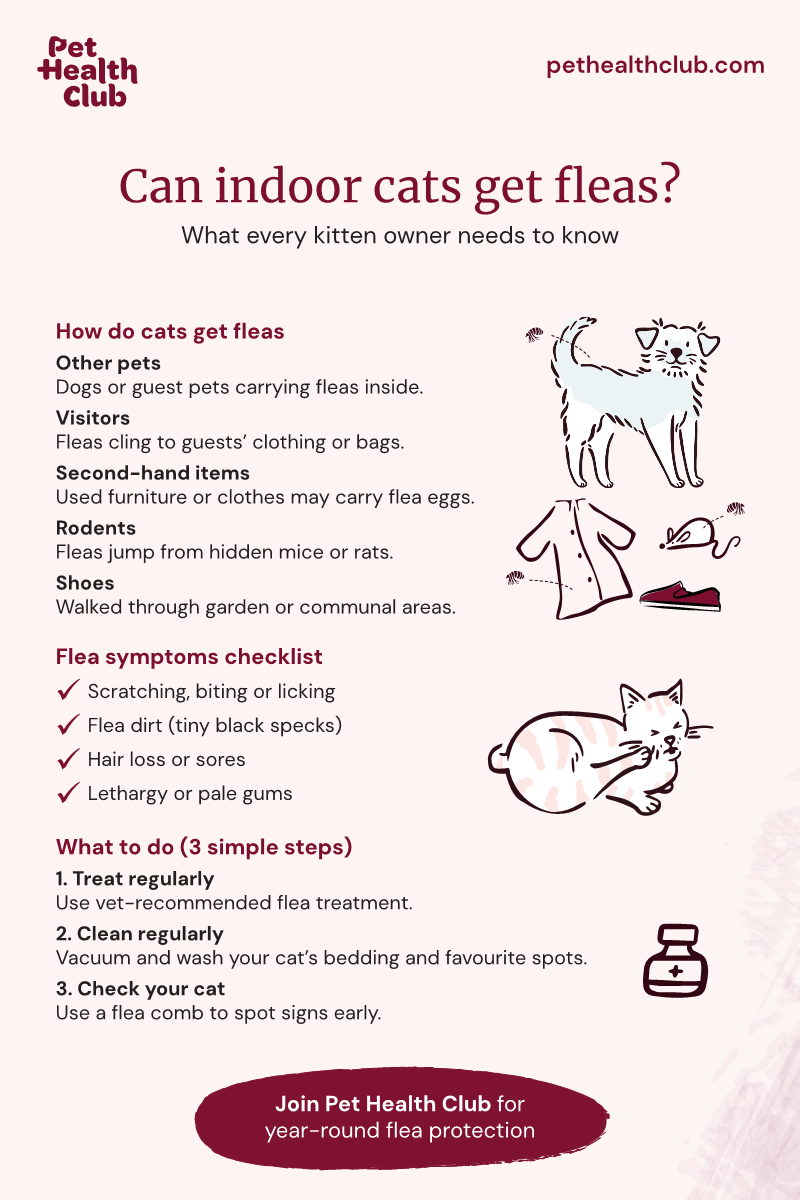
Cats are social, especially if they go outdoors. Contact with other cats, dogs, or wild animals (like raccoons, possums, or stray cats) can transfer fleas. Even a short nose-to-nose greeting can be enough.
2. Flea-infested Environments
Fleas lay eggs everywhere a host goes. So, when a cat visits an infested place—like a garden, park, under a porch, or even a friend’s house—they pick up new fleas. Flea larvae and pupae can survive for weeks to months in carpets, cracks, or outdoor shelters.
3. Humans As Carriers
Many owners don’t realize that people can carry fleas on their clothing, shoes, or bags. If you visit a home with pets or wildlife, fleas may hitch a ride and later jump to your cat. This is a key reason why even indoor cats can get fleas.
4. Used Furniture Or Pet Items
Second-hand items like rugs, beds, or cat trees can hide flea eggs or larvae. When you bring these into your home, you might bring fleas too. Always clean and inspect used items before use.
5. New Pets Or Visitors
Bringing a new pet (cat, dog, or even a rabbit) into your home without flea-checking them can start an infestation. Visiting animals, such as a friend’s dog for a playdate, can also carry fleas.
6. Boarding Or Shelters
If your cat stays at a kennel, cattery, or shelter, fleas can spread quickly between animals. Even short stays increase risk if the facility is not strict about flea control.
7. Outdoor Exploration
Free-roaming cats are most at risk. Fleas live in long grass, under bushes, and in shaded, humid spots. Hunting small animals like mice or birds also exposes cats to fleas, as these creatures often carry flea larvae.
8. Apartment Complexes
Even if your cat never goes outside, fleas can travel between apartments through hallways, shared laundry rooms, or vents. If a neighbor’s pet has fleas, yours could get them too.
9. Visits To The Vet Or Groomer
Places with a lot of animals, like veterinary clinics or grooming salons, sometimes have fleas despite cleaning routines. Waiting areas, exam tables, or cages are all possible sources.
10. Wildlife Near Home
Wild animals like squirrels, rats, or even birds can bring fleas into your yard. A cat that watches birds at the window or sits on a porch can still pick up fleas from the environment.
Why Indoor Cats Still Get Fleas
Many people believe their indoor cat is safe. However, indoor cats can and do get fleas. Here are the main reasons:
- Fleas are tiny and hide easily. Even one flea can start an infestation.
- Humans bring in fleas on clothes and shoes.
- Other pets in the home may go outside and bring fleas back.
- Visitors or used items can introduce fleas.
- Old eggs or larvae in the home can hatch months later, especially in warm, humid weather.
Common Signs Your Cat Has Fleas
Spotting fleas is not always easy. Here’s what to watch for:
- Frequent scratching or biting at the skin
- Small black specks (flea dirt) in the fur or on bedding
- Red, irritated skin
- Hair loss, especially around the tail or neck
- Restlessness or changes in behavior
- In severe cases, pale gums (anemia)
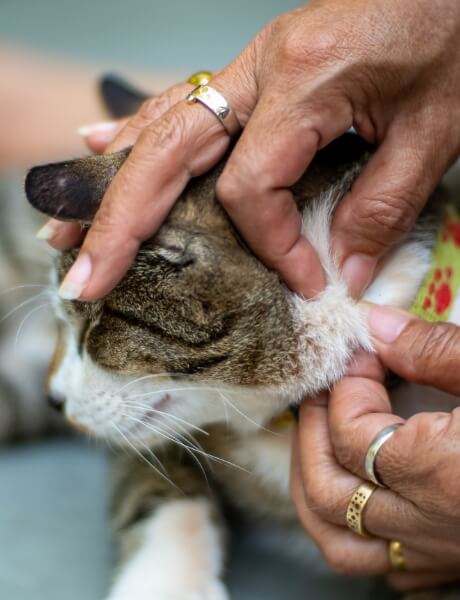
To check for fleas, use a fine-tooth flea comb and look for small, moving insects or black specks that turn red when wet (dried blood).
How Fast Can Cats Get Fleas?
Fleas are fast and efficient. A single adult female can lay up to 50 eggs per day. If your cat visits an infested area, it can pick up fleas in just a few minutes. Within a week, you may notice scratching, but sometimes signs take longer.
Here’s a quick comparison of how long it takes for a cat to pick up fleas in different settings:
| Situation | Time to Infestation | Risk Level |
|---|---|---|
| Outdoor exploration | Minutes to hours | High |
| Contact with another pet | Minutes | High |
| Humans bringing fleas inside | Hours to days | Medium |
| Used furniture/items | Days to weeks | Medium |
| Apartment building spread | Days to weeks | Low to Medium |
Credit: frontline.com
Why Do Some Cats Get Fleas More Than Others?
You may notice that one cat in your home always seems to have fleas, while another rarely does. Several factors can influence this:
- Outdoor access: Outdoor cats are at much higher risk.
- Grooming habits: Cats that groom less may not remove fleas as well.
- Fur type: Long-haired cats can hide fleas better, making them harder to spot.
- Health and age: Young, elderly, or sick cats are often more vulnerable.
- Use of flea prevention: Cats without regular prevention are more likely to get fleas.
Flea Infestation In The Home
When a cat has fleas, the whole home is affected. Flea eggs, larvae, and pupae fall off the cat and hide in carpets, bedding, cracks, and furniture. Only about 5% of fleas live on the pet; the rest are in the environment.
Here’s a breakdown:
| Flea Stage | Where Found | Percentage of Infestation |
|---|---|---|
| Eggs | Carpet, bedding, furniture | 50% |
| Larvae | Carpet, cracks, dark places | 35% |
| Pupae | Deep in carpet, soil | 10% |
| Adults (on pet) | On the cat | 5% |
This shows why treating your home is just as important as treating your cat.
Credit: www.pethealthclub.com
How To Prevent Cats From Getting Fleas
Prevention is easier and less stressful than dealing with an infestation. Here’s what works:
- Regular flea prevention: Use vet-approved topical treatments, collars, or oral medications—never human products, as they can be toxic.
- Vacuum frequently: Focus on carpets, rugs, furniture, and pet bedding. Dispose of the bag or clean the canister outside.
- Wash bedding: Clean all cat bedding in hot water weekly.
- Limit outdoor access: Keep cats indoors when possible, or supervise their time outside.
- Check new pets/items: Inspect and treat new animals and used pet items before bringing them home.
- Maintain your yard: Cut grass short and remove debris to reduce flea habitats.
- Treat all pets: If you have multiple pets, treat them all at the same time—even if only one is scratching.
- Be careful with visitors: Ask guests if their pets are flea-free before visits.
Treating A Flea Infestation
If your cat already has fleas, act quickly:
- Treat your cat: Use a fast-acting, vet-recommended flea treatment.
- Clean your home: Vacuum daily for two weeks, wash bedding, and treat carpets with safe sprays if needed.
- Treat all pets: Every pet in the house needs treatment, not just the itchy one.
- Repeat as needed: Flea eggs may keep hatching for weeks. Continue prevention and cleaning.
Avoid using essential oils or homemade remedies—many are toxic to cats. Ask your vet for safe options.
Non-obvious Insights About Fleas And Cats
- Fleas can jump, but not fly: They move by jumping, which is why cats pick up fleas from places the cat sits or sleeps, not just by walking.
- Flea pupae are nearly indestructible: They can survive vacuuming and most chemicals. Vibrations from walking or vacuuming can trigger them to hatch, so keep cleaning consistently for several weeks.
- You may never see an adult flea: A cat may groom away or eat adult fleas before you spot them. Flea dirt (tiny black specks) is often the first sign.
The Real Cost Of Ignoring Fleas
Fleas are more than a minor annoyance. Cats with heavy infestations can develop skin infections, tapeworms, and even severe anemia. In rare cases, kittens have died from untreated fleas. Fleas also bite humans, causing itchy spots and sometimes allergic reactions.
If you notice any signs of fleas, don’t wait. Quick action protects your cat and your family.

Credit: justcatsclinic.com
Frequently Asked Questions
How Long Do Fleas Live On A Cat?
Adult fleas can live on a cat for up to 2-3 months if not removed. However, they start laying eggs within 24-48 hours of their first blood meal. Fast treatment is important to break the cycle.
Can Indoor Cats Get Fleas?
Yes, indoor cats can get fleas. Fleas can come in on shoes, clothes, used furniture, or from other pets. Even if your cat never goes outside, there is still a risk.
Do Fleas Carry Diseases To Cats?
Yes, fleas can transmit several diseases. These include tapeworms, Bartonella (cat scratch fever), and in rare cases, even plague. Flea bites can also cause allergies and skin infections.
How Can I Tell If My Cat Has Fleas Or Just Itches?
Look for flea dirt (black specks) in your cat’s fur or on bedding. Use a flea comb to check the base of the tail and neck. If you see moving insects or flea dirt, your cat likely has fleas.
What Is The Best Way To Prevent Fleas On Cats?
The best prevention is regular use of vet-approved flea treatments, combined with keeping your home clean and checking new pets or items before bringing them inside. Always treat all pets in the house, not just the affected one.
For more in-depth information on fleas and how to control them, visit the Wikipedia Flea page.
Understanding how cats get fleas is the first step to keeping your pet happy and healthy. With careful prevention, regular checks, and quick action, you can protect your cat from these annoying and potentially dangerous pests.
