
Losing a cat is an emotional experience that can leave any pet owner feeling worried, helpless, and unsure where to begin. Unlike dogs, most cats are independent and often hide when scared, making them harder to find. But don’t lose hope—many lost cats are reunited with their families.
With the right steps, a calm mind, and some patience, your chances of finding your feline friend can be much higher than you might think.
This guide explains exactly how to find a lost cat, offering proven methods, practical tips, and expert insights. Whether your cat is indoor-only, outdoor, or a mix of both, these steps will help you act quickly and effectively. Along the way, you’ll learn common mistakes, how to use your cat’s behavior to your advantage, and strategies that work even when days have passed.
Immediate Steps To Take When Your Cat Goes Missing
Acting fast is key. In the first few hours, your actions can make a big difference.
1. Search Your Home Thoroughly
It’s surprising, but many “lost” cats are actually hiding in the house. Check every room, closet, under furniture, behind appliances, inside boxes, and in any small space your cat could squeeze into. Use a flashlight—even for daytime searches. Cats’ eyes reflect light, making it easier to spot them in dark areas.
Don’t forget to check garages, sheds, basements, attics, and even inside drawers or washing machines.
2. Call Your Cat’s Name Calmly
Walk around your home and yard calling your cat’s name in a soft, friendly voice. Shake a treat bag, tap their food bowl, or use a favorite toy to attract them. Some cats respond better to the sound of a can opener or treats than their own name.
3. Search The Immediate Area Outside
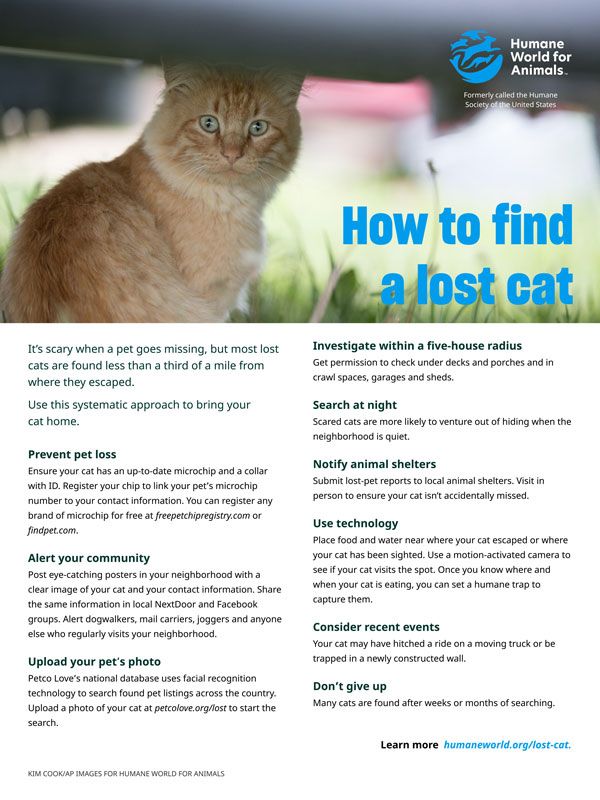
If your cat is not inside, start a slow, careful search near your home. Most lost indoor cats stay within 50 meters (164 feet) of their escape point, often hiding silently. Look under decks, porches, bushes, in garages, and around parked cars. Cats may freeze in fear and won’t come out even if you call, so use a flashlight and check every possible hiding spot.
4. Inform Household Members And Neighbors
Tell everyone in your home, and alert close neighbors. Ask them to check their own garages, sheds, and under decks. A cat could be accidentally locked in somewhere.
Understanding Lost Cat Behavior
Knowing how cats react when lost helps you focus your search.
- Indoor Cats: When an indoor cat escapes, they usually stay close to the house, hiding quietly. They are often too scared to come when called.
- Outdoor Cats: If your outdoor cat goes missing, their territory is larger. They may be exploring or could be trapped in a neighbor’s shed or garage.
- Displacement: Sometimes, cats are chased by another animal or scared by loud noises and end up far from home. In these cases, they may be silent and very difficult to spot.
Studies show that 75% of lost cats are found within 500 meters (about 1,640 feet) of their home. Most are recovered within a week, but some return after weeks or even months.
Expanding Your Search
If your initial search turns up nothing, it’s time to go further.
1. Create And Distribute Lost Cat Flyers
Design a simple flyer with a clear photo, your cat’s name, description, and your contact information. Offer a reward if possible—it can motivate people to help. Place flyers on lamp posts, bus stops, and community boards, and hand them to people walking in your area.
2. Ask Neighbors And Delivery Drivers
Talk to as many people as possible: neighbors, postal workers, garbage collectors, and delivery drivers. They are often out and about and may have seen your cat.
3. Visit Local Animal Shelters And Vets
Go to all nearby shelters and animal control centers. Bring a photo and description. Check their found animal records and ask to see all cats, not just those that match your cat’s color or size.
4. Post On Social Media And Pet-finding Sites
Share your lost cat’s photo and details on Facebook, Instagram, and Twitter. Use local community groups and lost pet pages. Websites like Petfinder and Nextdoor can help reach more people.
5. Use Online Lost Pet Databases
Register your cat as missing on online lost and found pet databases. Some popular ones include PawBoost, LostMyKitty, and your local animal rescue websites.
6. Set Up A Safe Outdoor Shelter
Place a cardboard box, carrier, or small shelter with a blanket outside your door. Add some of your cat’s bedding or an item with your scent. This can attract your cat back, especially at night.
7. Leave Food And Water Outside (carefully)
Put your cat’s favorite food and fresh water near your door. Avoid leaving too much food, as it can attract other animals.
Using Technology To Find Your Cat
Modern technology offers extra tools for pet owners.
Microchips And Gps Collars
If your cat is microchipped, contact the company to mark them as missing and update your contact details. Some GPS collars allow real-time tracking, but most require a subscription and only work if the collar is still on your cat.
Security Cameras And Motion Sensors
Set up a security camera or motion sensor near food or the entrance your cat used to escape. Review the footage for any sign of your cat at night or early morning, as cats are often active during these hours.
Comparison: Microchip Vs. Gps Collar
This comparison shows the main differences:
| Feature | Microchip | GPS Collar |
|---|---|---|
| Location Tracking | No, only ID info | Yes, real-time |
| Needs Charging | No | Yes |
| Can Fall Off | No | Yes |
| Works if Cat is Found | Yes | No, unless still wearing |
| Cost | Low, one-time | Higher, plus subscription |
Best Times And Techniques To Search
Finding a lost cat often depends on how and when you search.
- Best Search Times: Early morning (dawn) and late at night (dusk or after dark) are the best times. Streets are quieter, and cats feel safer coming out.
- Bring a Flashlight: Even during the day, a flashlight helps see eyeshine under bushes or in tight spaces.
- Walk Slowly and Quietly: Move slowly, listen for soft meows or rustling, and avoid making sudden noises.
- Use Familiar Sounds: Bring your cat’s favorite toy or use the sound of their food bowl.
Search Area By Cat Type
| Cat Type | Likely Search Area |
|---|---|
| Indoor-only | Within 50-100 meters of home |
| Outdoor-access | Up to 500 meters from home |
| Displaced (chased/scared) | Can be unpredictable, but often still within 1 km |
What To Avoid When Searching
Some actions can make your search harder.
- Don’t Chase or Yell: A frightened cat may run further away if chased or if you shout.
- Don’t Leave Doors Open Unattended: Other animals may enter your home. Supervise any open doors if you’re waiting for your cat.
- Don’t Rely Only on Food: Food can attract raccoons, skunks, or stray dogs, which may scare your cat away.
- Don’t Give Up Too Soon: Many cats return after several days or even weeks.
Credit: humanepro.org
What To Do If Your Cat Is Still Missing After Several Days
If your cat hasn’t come home after a few days, try these advanced steps:
1. Expand Your Search Area
Widen your search to several blocks or even further. Repeat visits to shelters and keep updating your flyers.
2. Check Local Lost And Found Posts Daily
Animals may be brought in days later. Always check new listings and photos carefully.
3. Ask About Trapping
If you suspect your cat is hiding nearby but won’t come out, you can borrow a humane trap from a rescue group or shelter. Place it near home with strong-smelling food like tuna or sardines.
4. Hire A Pet Detective
Some professionals specialize in tracking lost pets using scent dogs or experience with cat behavior.
5. Keep Hope
Some cats return after weeks or months. Don’t lose hope, and keep checking with shelters.
Key Insights Many Cat Owners Miss
- Silent Hiding: Most lost cats, especially indoor-only cats, do not meow or make noise when hiding—even if you are nearby. That’s why searching visually with a flashlight is more effective than just calling.
- The “Threshold Effect”: Lost cats often hover near the home but may not cross back inside because the doorway feels unsafe. Leaving a familiar scent trail (like dirty laundry) from the escape point to a safe shelter can help guide them.
Tips For Preventing Future Escapes
Once your cat is home, prevention matters.
- Check All Windows and Doors for broken screens or gaps.
- Microchip Your Cat and keep the info updated.
- Use a Collar with an ID Tag (breakaway style is safest).
- Train Your Cat to come when called—use treats as a reward.
Frequently Asked Questions
What Are The Chances Of Finding A Lost Cat?
Most lost cats are found. Studies show that about 61% of lost cats are reunited with their owners. Indoor-only cats are more likely to be found close to home, while outdoor cats may wander farther.
How Long Should I Look Before Giving Up Hope?
Don’t give up. Some cats come home after weeks or even months. Keep searching, checking shelters, and updating your flyers. Persistence pays off.
Credit: americanpetsalive.org
Will My Cat Come Back On Its Own?
Many cats do return by themselves, especially if they are used to the area. Leaving out food, water, and familiar scents can help. However, active searching increases your chances.
Should I Use A Humane Trap To Catch My Cat?
Yes, if your cat is hiding nearby but won’t come out, a humane trap can help. Use strong-smelling food and check the trap often to avoid catching other animals.
Credit: www.reddit.com
What Should I Do If I Find Someone Else’s Lost Cat?
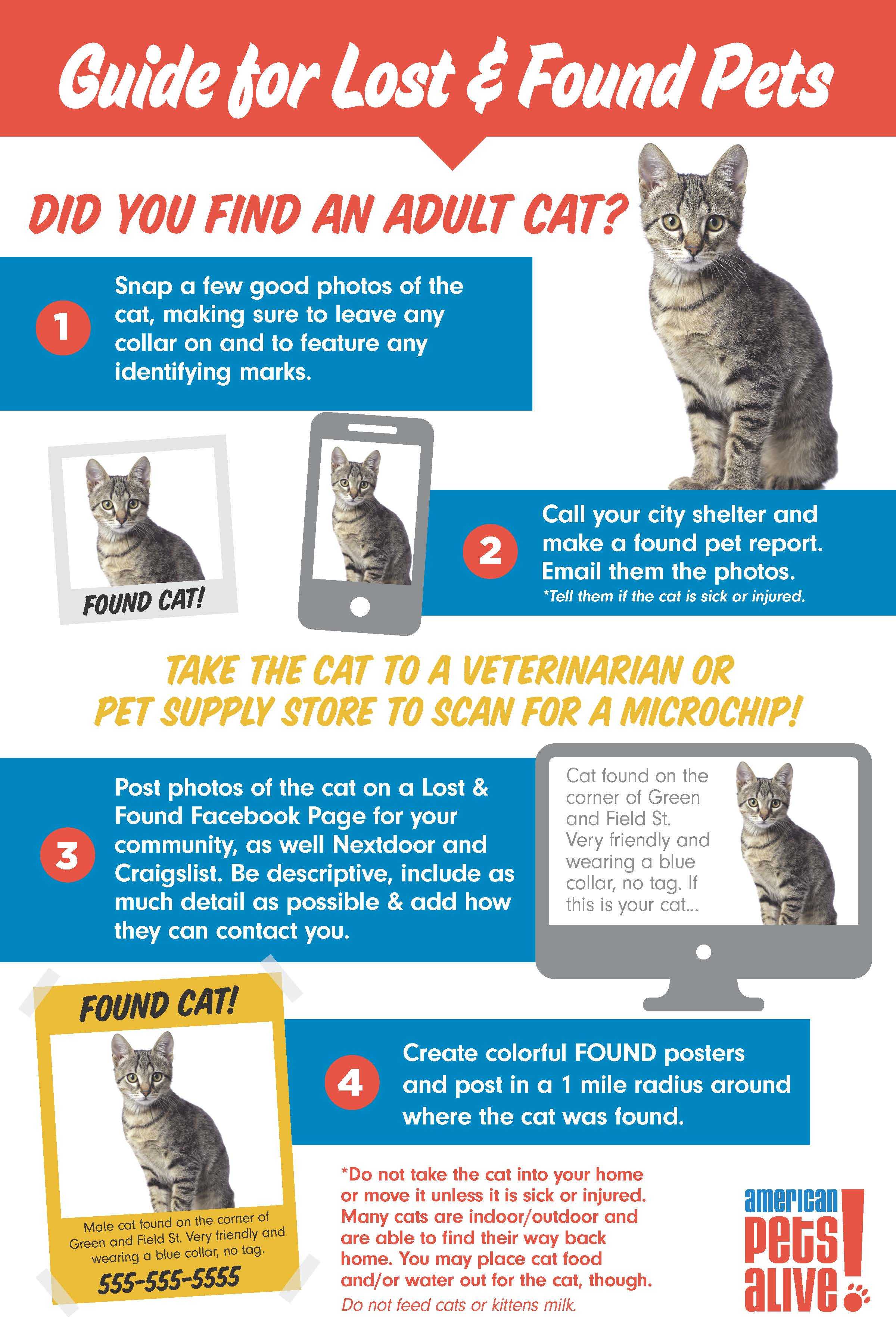
Try to contact the owner using any ID tag or microchip. If you can’t find the owner, take the cat to a local shelter or vet to scan for a microchip. Share a photo on social media and community boards.
Finding a lost cat can be stressful, but with a calm approach and the right steps, you have a good chance of being reunited. Use every tool available and never underestimate your cat’s ability to survive and find their way home.
Your efforts can make all the difference.
