
Many cat owners wonder, “How much should I feed my cat? ” It’s a question that seems simple, but the answer is not always clear. Cats come in all shapes, sizes, and life stages. Each cat’s needs are unique, and overfeeding or underfeeding can cause health problems.
As a friendly mentor, I’ll help you understand how to feed your cat the right amount, as if you were getting advice straight from a trusted vet. Let’s explore the facts, the science, and the practical details to help your cat stay healthy and happy.
Why The Right Food Amount Matters
The amount you feed your cat affects more than just weight. Too much food can lead to obesity, diabetes, or joint problems. Too little can cause malnutrition, weak immunity, and even organ failure. Modern indoor cats are especially at risk of being overweight due to low activity levels. That’s why understanding your cat’s needs is essential for a long, healthy life.
Factors That Affect How Much To Feed Your Cat
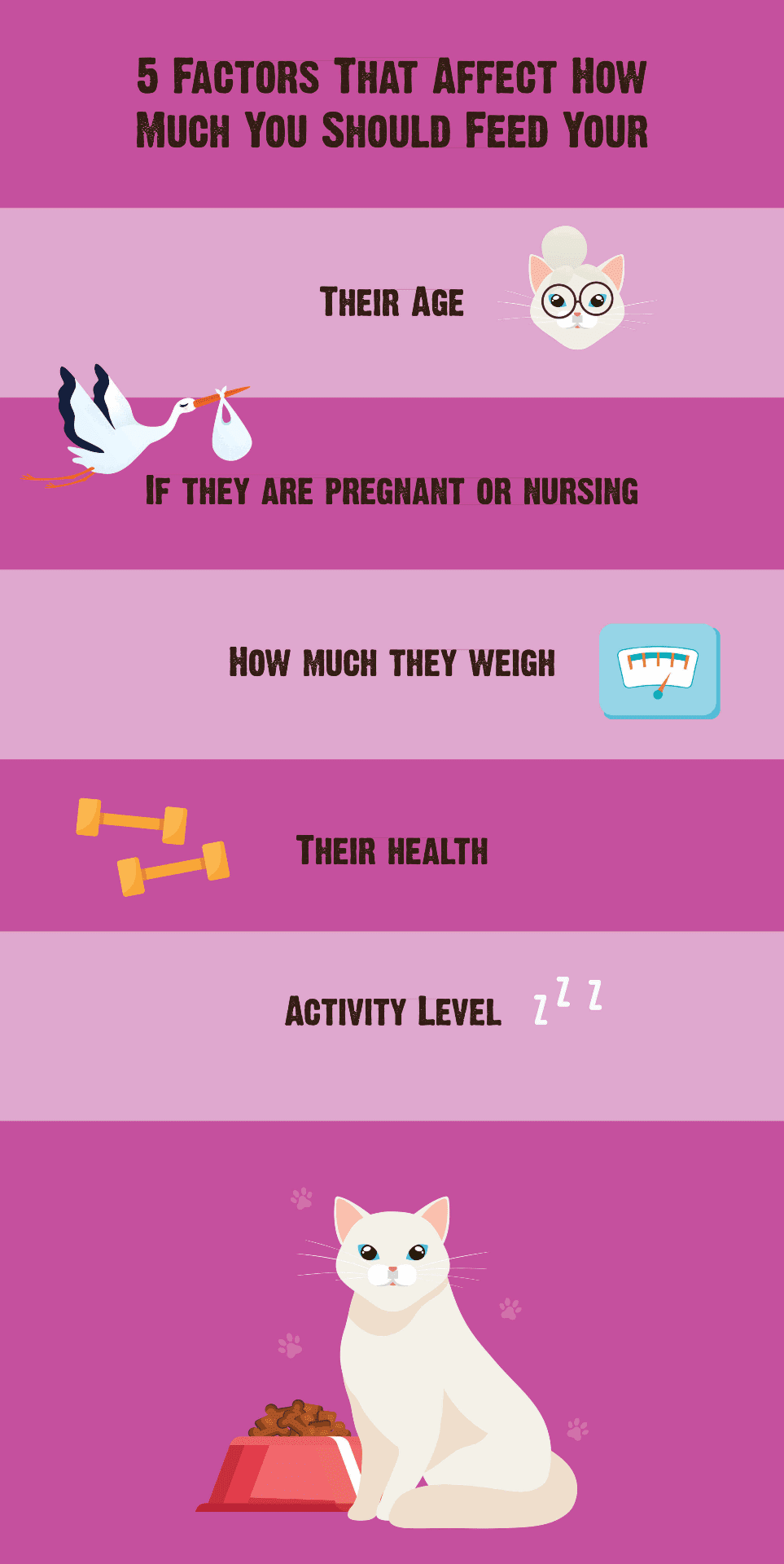
Every cat is different. Vets look at several factors to decide the right food amount:
Age
- Kittens need more calories for growth and energy.
- Adult cats require stable, moderate calories to maintain their weight.
- Senior cats (over 7 years) may need fewer calories, but higher-quality protein.
Weight And Body Condition
A cat’s body condition score (BCS) is a vet’s tool to judge if a cat is underweight, ideal, or overweight. You can use these signs at home:
- Ribs easily felt but not seen: Ideal
- Visible ribs: Underweight
- Ribs hard to feel, rounded belly: Overweight
Activity Level
- Active cats burn more calories.
- Indoor cats move less and need fewer calories.
Type Of Food
Calories per cup or can differ between brands and types. Wet and dry foods have different energy densities.
Health Status
Illness, pregnancy, or recovery from surgery can change your cat’s needs.
How Vets Calculate Feeding Amounts
Vets don’t guess. They use math to estimate daily calorie needs, called Resting Energy Requirement (RER). The basic formula is:
Rer (kcal/day) = 70 X (body Weight In Kg)^0.75
But for most healthy, adult indoor cats, a simple rule is:
- 20 calories per pound (45 calories per kg) of healthy body weight per day
This is only a starting point. Adjust as needed for weight, health, and activity.
Practical Guide: Daily Cat Feeding Amounts
Here’s a guide for average, healthy cats:
| Cat Weight (kg) | Daily Calories (kcal) | Typical Dry Food (grams) | Typical Wet Food (grams) |
|---|---|---|---|
| 2.5 | 110 | 25-30 | 100-120 |
| 4 | 180 | 40-50 | 160-200 |
| 6 | 240 | 55-65 | 240-260 |
| 8 | 290 | 70-80 | 320-350 |
Important: Always check the calorie value on your cat food’s label, as these numbers are averages.
How To Read Cat Food Labels
Not all foods are the same. Learn to read the label for key details:
- Calorie content: Often listed as kcal/cup (dry) or kcal/can (wet).
- Serving size: How much food equals the listed calories.
- Nutritional adequacy: Look for statements like “complete and balanced.”
If the label is confusing, ask your vet to help you understand it.
Wet Food Vs. Dry Food: Does It Change How Much To Feed?
Yes, it matters. Wet food has more water, so cats must eat more grams to get the same calories.
| Food Type | Calories per 100g | Typical Portion Size |
|---|---|---|
| Dry food | 350-400 kcal | 40-70g/day |
| Wet food | 70-110 kcal | 150-350g/day |
Non-obvious insight: Wet food helps with hydration, especially for cats that drink little water. But it’s easier to overfeed dry food due to its higher calorie density.
Credit: catlovers.alibaba.com
Feeding Kittens: Special Considerations
Kittens grow quickly and need more calories, protein, and fat than adults. Feed them:
- 3-4 meals per day
- Special kitten food labeled “for growth”
Use these rough guidelines:
- Up to 6 months: Let them eat as much as they want in 3-4 meals.
- 6-12 months: Start measuring portions, but allow some freedom.
Kittens should not eat adult cat food only. They require more nutrients for proper bone and organ development.
Feeding Adult Cats
Most adult cats do best with:
- 2 meals per day (morning and evening)
- Measured portions based on their ideal weight and food label calories
Some cats prefer free feeding (food always available), but this can cause overeating. If your cat is overweight, switch to set meal times.

Credit: latrinita.ch
Feeding Senior Cats
Older cats (over 7 years) may:
- Lose muscle, even if their weight is stable
- Need more protein, but fewer calories if less active
Choose a senior formula and watch for changes in appetite or weight. Some cats develop health issues and may need a special diet.
Tips For Multi-cat Homes
Feeding more than one cat adds challenges:
- Different needs: Cats may need different amounts or types of food.
- Food stealing: Greedy cats may eat more than their share.
- Stress: Competition can cause some cats to eat less.
Try these strategies:
- Feed cats in separate rooms or at different times.
- Use microchip feeders for strict portion control.
- Watch each cat’s weight and adjust as needed.
How To Tell If Your Cat Is Eating The Right Amount
Don’t just trust the bowl. Check your cat’s body condition every month:
- Ribs easily felt, waist visible: Good
- Hard to feel ribs, no waist: Overweight
- Prominent ribs, visible spine: Underweight
Weigh your cat monthly. A healthy adult cat’s weight should not change by more than 5% up or down.
Common Feeding Mistakes And How To Avoid Them
Even caring owners make mistakes. Here are a few, and how to fix them:
- Guessing portion sizes: Use a kitchen scale or measuring cup.
- Ignoring treats: Treats should be less than 10% of calories.
- Overfeeding dry food: It’s easy to pour too much. Measure carefully.
- Not adjusting for weight gain/loss: If your cat gains or loses weight, change the portion by 10% and re-check in 2 weeks.
- Feeding only once daily: Most cats do better with 2+ meals.
Non-obvious insight: Many cats become overweight after neutering or spaying due to lower metabolism, so reduce food by about 20% after surgery.
What About Treats And Table Scraps?
Treats are fine in moderation, but:
- Use low-calorie treats
- Count them as part of daily calories
- Human foods (like tuna or chicken) should only be tiny bits and not seasoned
Avoid foods toxic to cats: chocolate, onions, garlic, grapes, and bones.
Special Diets: When To Ask Your Vet
Some cats need therapeutic diets for:
- Kidney disease
- Diabetes
- Food allergies
- Urinary problems
Never change to a special or homemade diet without your vet’s guidance. These diets are balanced for specific medical needs.
Credit: rawznaturalpetfood.com
Real-life Example: Feeding Two Different Cats
Let’s say you have a 4kg young adult and a 7kg senior.
- The 4kg cat needs about 180 kcal/day. She eats 50g of dry food.
- The 7kg cat is less active, so needs only 230 kcal/day. He eats 60g of a senior formula.
You feed both twice a day, in separate bowls, and weigh them monthly. If one gains weight, you reduce food by 10% and monitor.
How To Safely Change Your Cat’s Food
Switching food suddenly can upset your cat’s stomach. Make changes slowly:
- Mix 25% new food with 75% old for 2-3 days.
- Then, 50% new, 50% old for 2-3 days.
- Then, 75% new, 25% old for 2-3 days.
- Finally, 100% new food.
This helps prevent vomiting or diarrhea.
How To Talk To Your Vet About Cat Feeding
Bring this information to your vet visit:
- Your cat’s current weight
- Type and brand of food
- How much you feed per meal
- Any treats or human foods
Your vet can then give tailored advice. If you want to learn more about feline nutrition, the World Small Animal Veterinary Association offers trusted resources.
Frequently Asked Questions
How Do I Know If I Am Feeding My Cat Too Much?
If your cat is gaining weight, losing their waist, or you can’t feel their ribs, you’re likely feeding too much. Use a kitchen scale to measure food and monitor weight monthly.
Can I Free-feed My Cat?
Free-feeding works for slim, active cats but often leads to overeating and obesity in indoor cats. Measured meals are safer for most cats.
How Many Times A Day Should I Feed My Cat?
Most adult cats do best with two meals a day. Kittens need 3-4 meals, and some seniors may prefer smaller, frequent meals.
Should I Feed Wet Or Dry Food?
Both can work if they are complete and balanced. Wet food helps with hydration and is less calorie-dense, but dry is easier to store. Some cats do well on a mix.
My Cat Is Always Hungry. Is That Normal?
Some cats beg for food out of habit, not hunger. But sudden increased hunger can signal health problems like diabetes or thyroid disease. If your cat’s appetite changes quickly, see your vet.
—
Feeding your cat the right amount is about finding a balance—watch your cat’s weight, use the food label as a guide, and adjust as needed. If you’re ever unsure, a chat with your vet can give you peace of mind and keep your cat healthy for years to come.
